Mode A
Palette
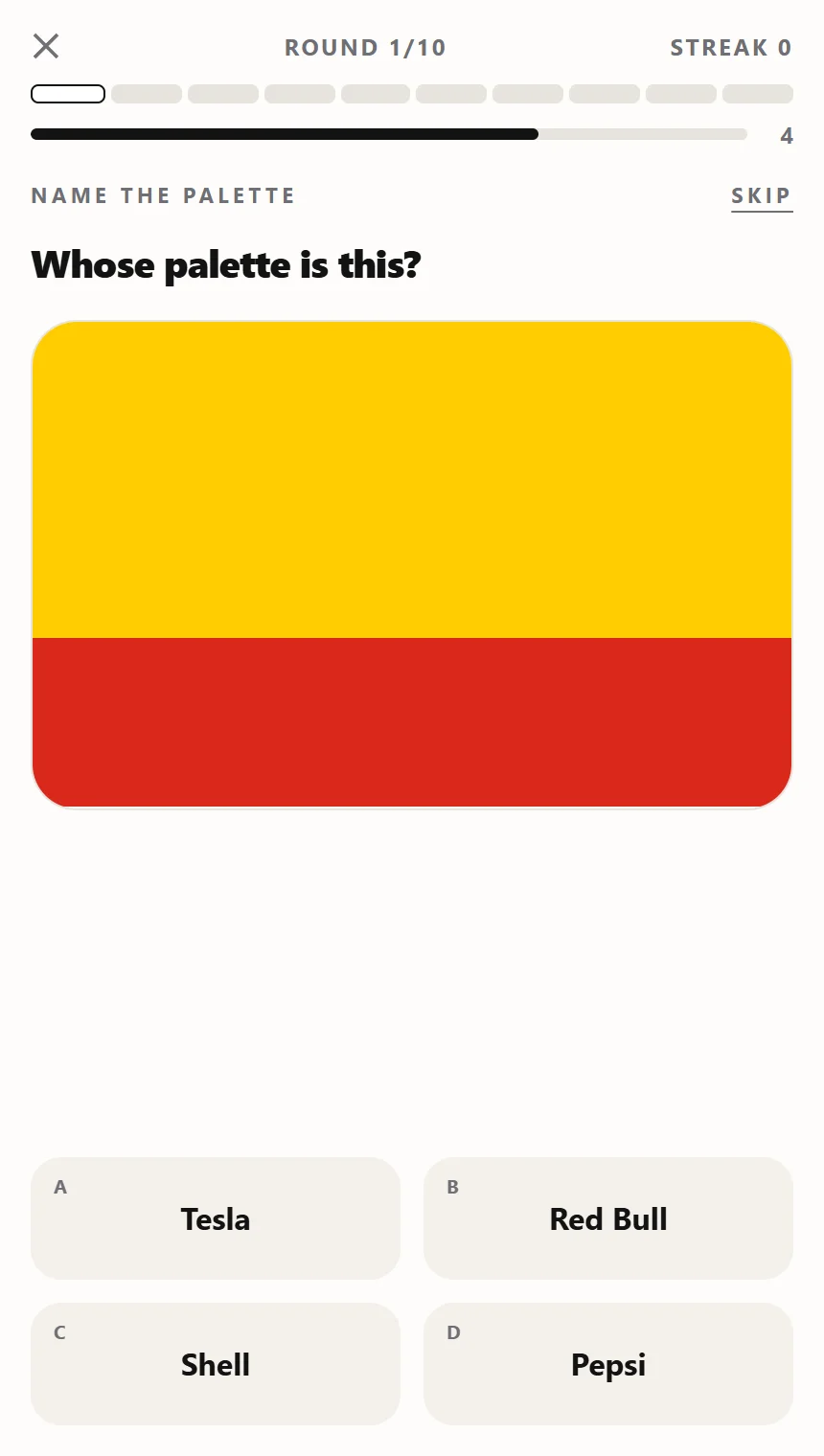
Four proportional blocks, no logo, no name. Just the colors and their ratio. Name the brand.
You have seen these logos ten thousand times. Brandr is a small game I designed and built to measure what actually stuck: not whether you know the brand, but whether you remember its color, its exact shade, its true shape. One dataset, five challenges, every score worked out right there in the browser.
Ask anyone to picture the Cadbury logo and they will get the purple, the swash, the feeling. Ask them for the exact purple and they fall apart. Recognition is instant and effortless; recall is a different muscle entirely, and brands spend fortunes betting you never test it.
Brandr is that test, turned into a game. It strips a logo down to a palette, drains it to grey, quietly doctors it, or hands you a blank canvas, and asks how much of it you truly kept. It is equal parts party game and a designer's note-to-self about how memory actually holds a brand.
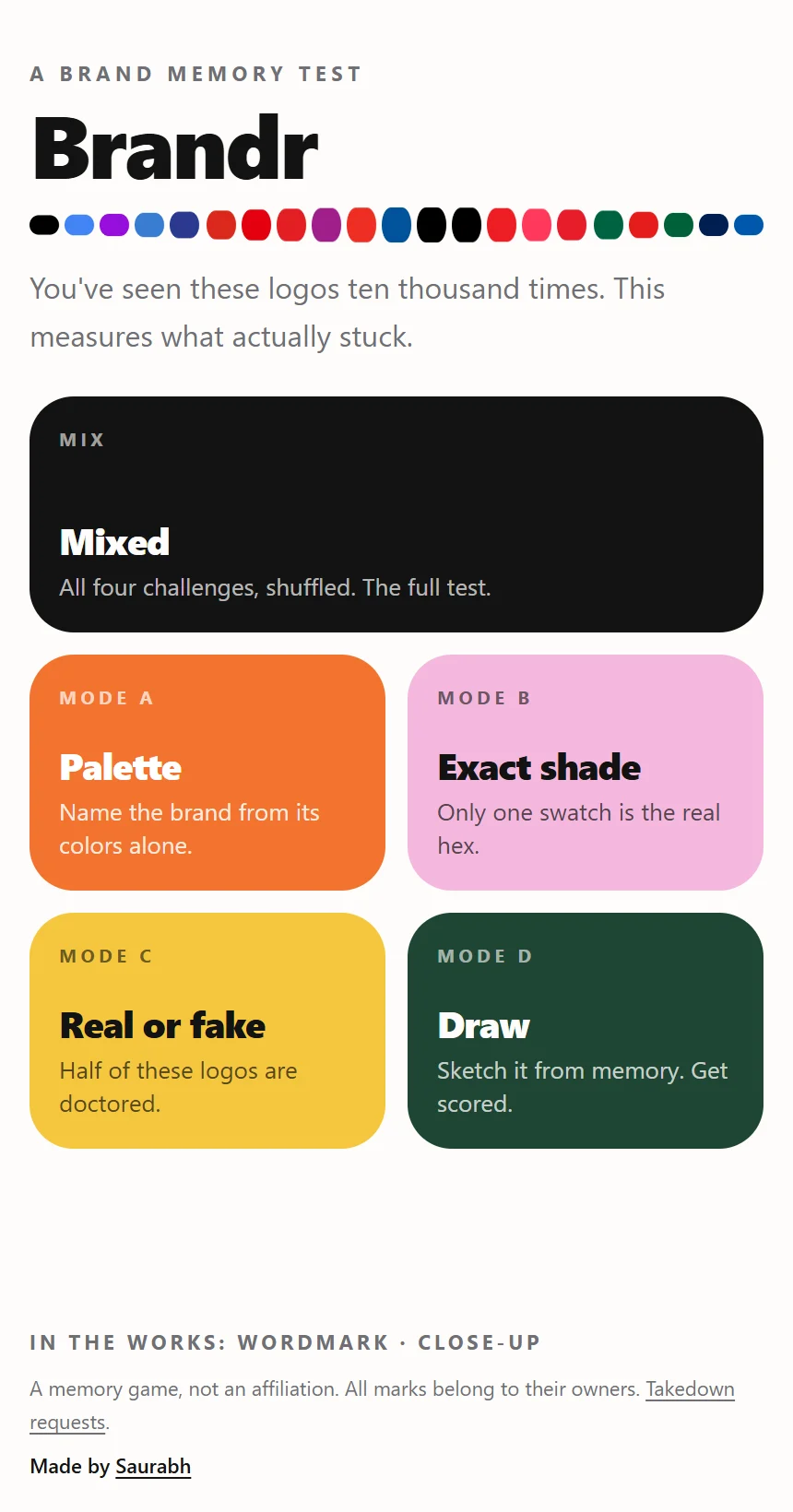
Each mode asks a different question of the same brand: its color, its precise hex, its authenticity, its shape. Play them apart, or take Mixed, where all four shuffle into one ten-round run.
Four proportional blocks, no logo, no name. Just the colors and their ratio. Name the brand.
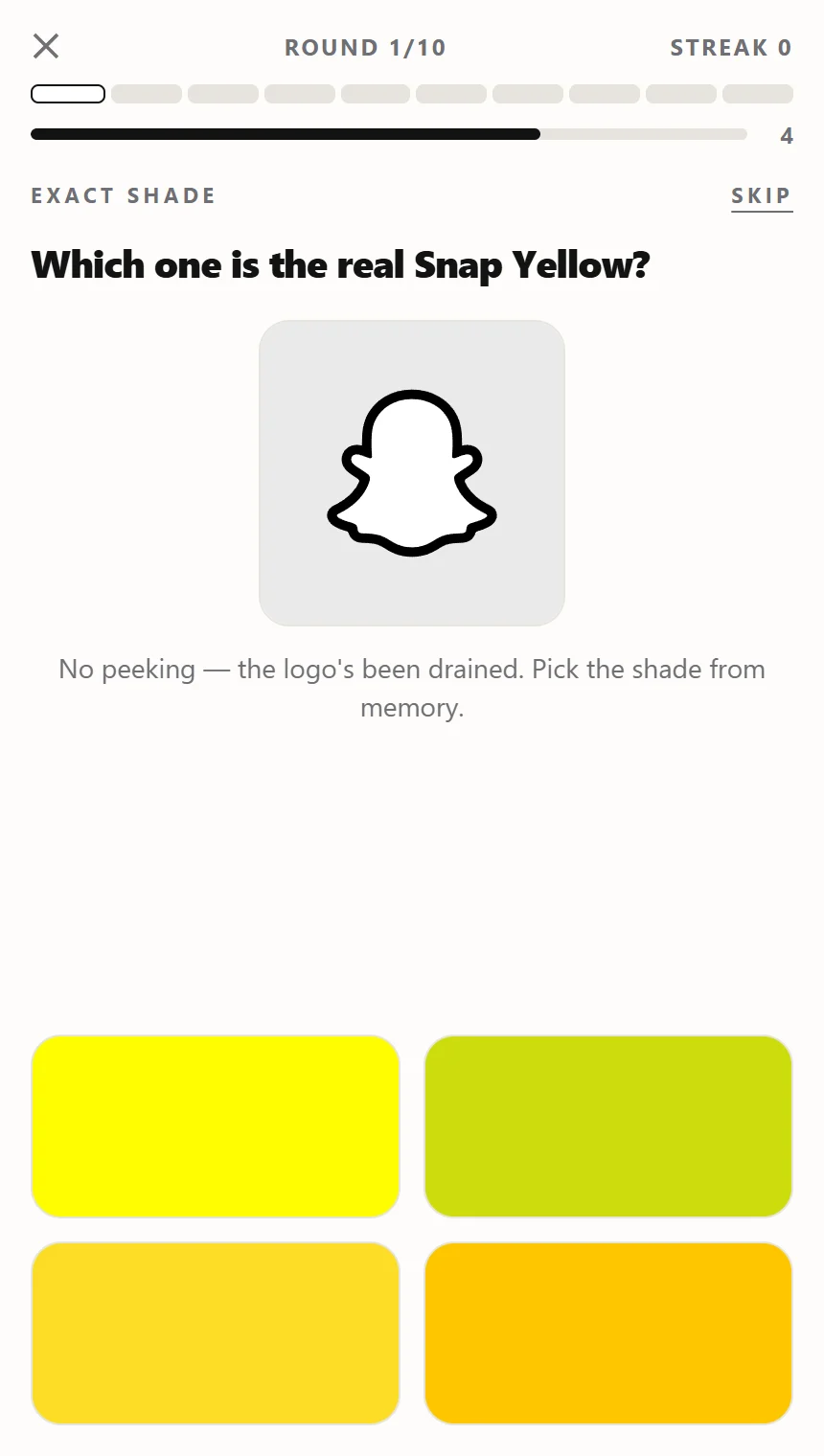
The logo is drained to grey. Pick its true color from four near-identical shades, from memory.
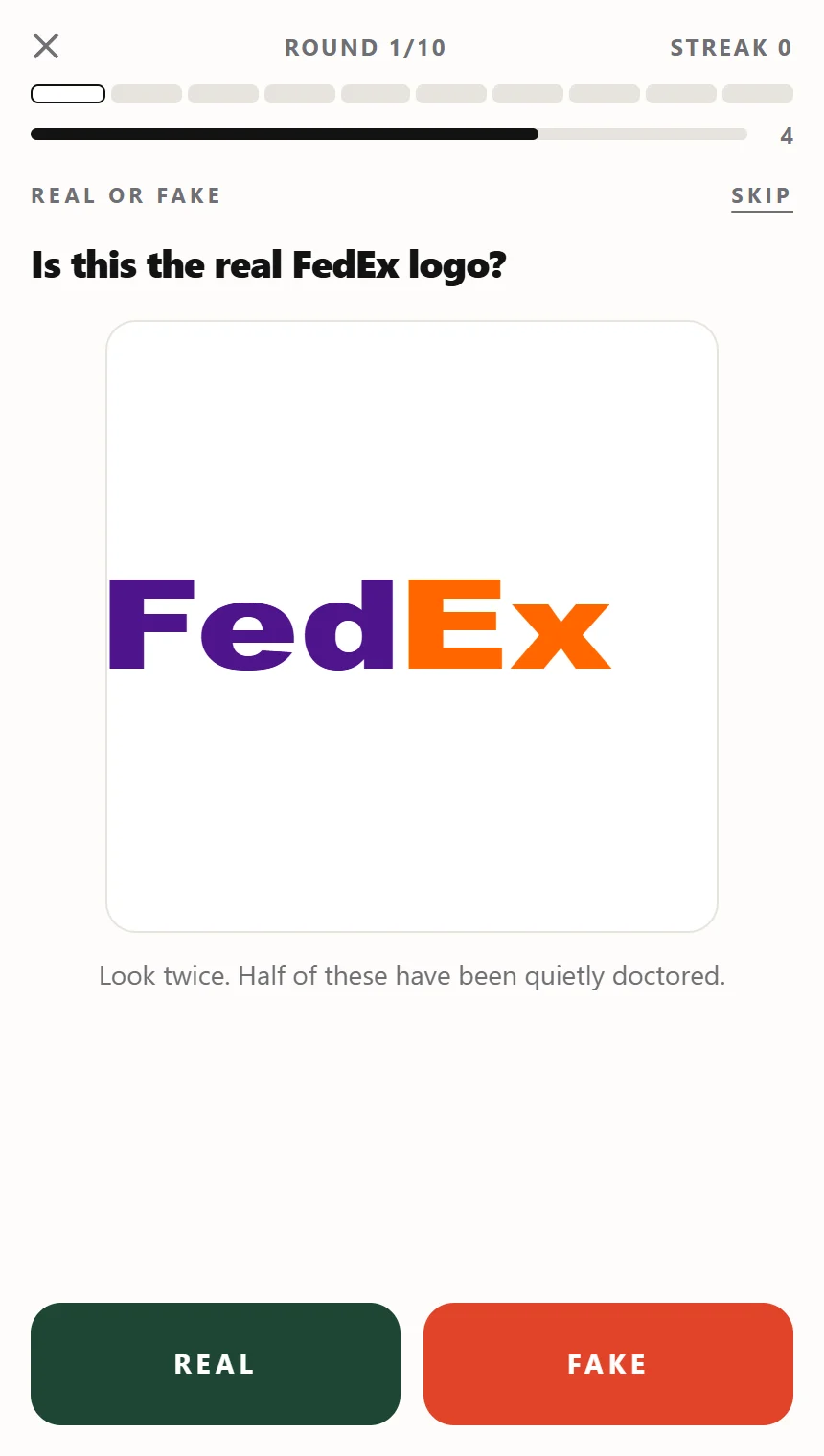
Some logos are pixel-perfect. Some have been quietly nudged off-color. Call each one.
A blank canvas and the brand's real colors. Freehand the logo, and get scored on how close you land.
The fun part was the data model. Get one dataset right and five games fall out of it almost for free. The rest was making the hard bits, the fakes and the sketch scoring, feel effortless.
A single brands.json, roughly 105 brands and counting, holds each brand's name, logo and proportioned palette. Every mode is just a different question asked of the same rows.
Each session runs off a seed, so the shuffle, the wrong answers and the doctored logos are all deterministic. Two people on the same seed sit the exact same test.
Real-or-fake needs no hand-made forgery library. Doctored logos are produced on the fly, with seeded hue shifts applied to the real SVG so every fake is fair.
Draw grades your strokes against the real mark with an edge-based chamfer similarity, turning 'close enough' into an honest number from 0 to 100.
A build step re-reads each logo's SVG and reconciles the stored hex values against it, so palettes and exact-shade answers stay true to the source art.
Static Next.js on Vercel. State lives in sessionStorage for a single sitting. Nothing to sign in to, nothing stored, nothing to leak.
Ten rounds, five minutes, one number. Find out whether you really know the logos you see every day.
A memory game, not an affiliation. All marks belong to their owners.